Brian Asingia
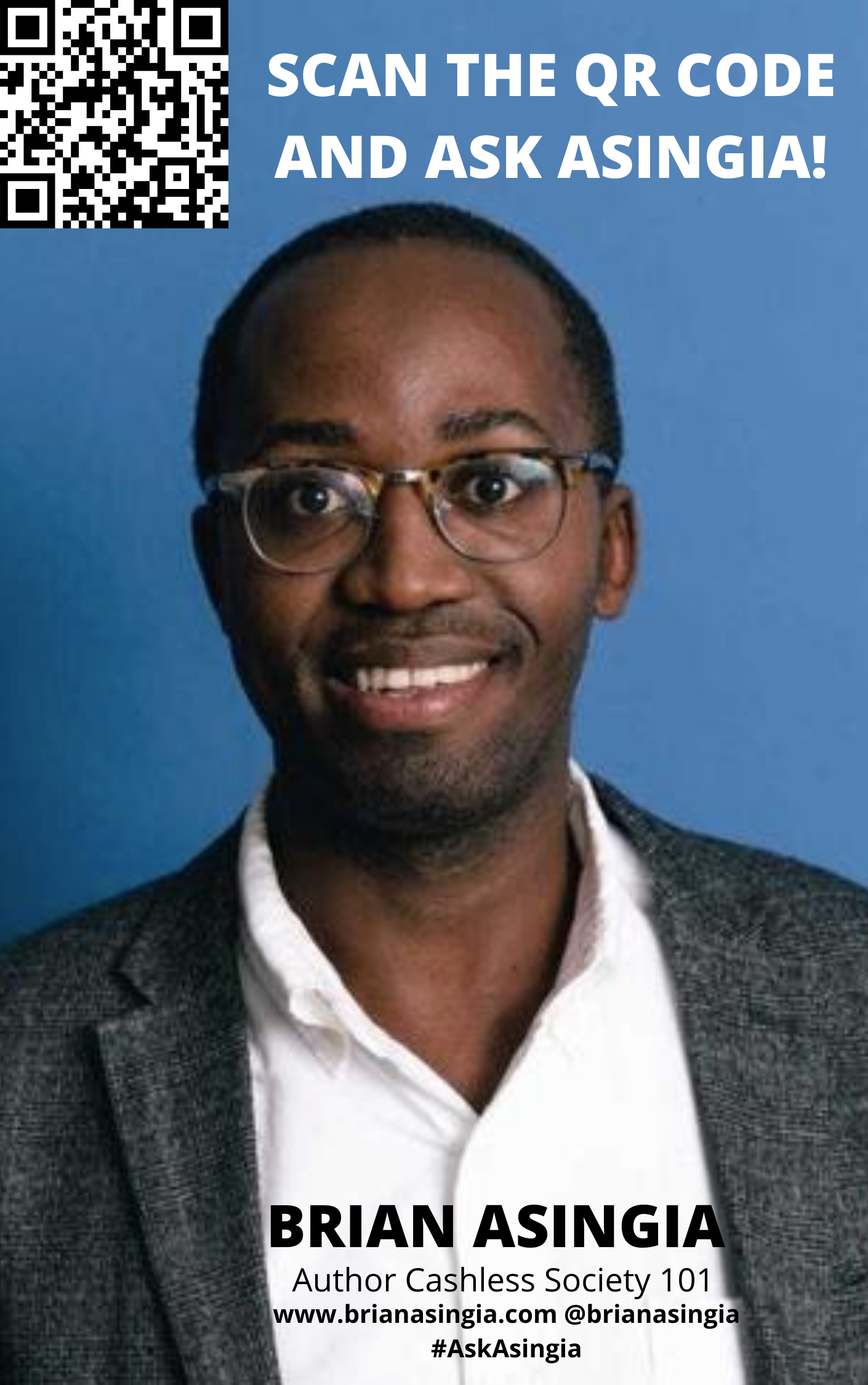
Author, Advisor, Investor
The Last Digital Frontier: The History and Future of Science and Technology in Africa
This book tells a long overdue and timeless story of the rise of mankind in Africa, uncovers inventions and innovations across the continent throughout time, and paints a forecast of its digital revolution in the 21st century and beyond. The book provides a compelling historic and forward-looking exploration of “the last digital frontier” of access and inclusion, Africa, and its potential to lead, host, and create the innovation breakthroughs of the future.
PDF Copy: Download preview (Not for Resale)
Print and Ebook Copy: www.brianasingia.com, global online retailers and more.
CASHLESS SOCIETY 101: The Art and Culture of Ethics and Values Based Innovation and Design Strategy
In his books and talks, Asingia captures the essence of how humanity-first design and innovation can leverage technology in delivering meaningful solutions for the 21st century and beyond. By putting ethics and values first, automation, data privacy, cyber-security and other concerns of the future of work, education, health and finance can be approached in a sustainable way. Cashless Society is both an ethical philosophy and a technocratic ideal.
PDF Copy: Download preview (Not for Resale)
Print and Ebook Copy: www.brianasingia.com, global online retailers and more.
Brian Asingia: Author One-Pager
Name: Brian Asingia
Phone: +1 (347) 480 9490
Email: dream@thepearldream.com | cashlesssociety@thepearldream.com
Social Media: @brianasingia
Website: www.brianasingia.com
Author Bio (from book):
After beginning his career on Wall Street, Brian Asingia branched out to work in the intersection between technology, finance, business, and the arts. He has consulted for startups, governments, diplomats, educational institutions, and programs. Asingia is now the CEO and co-founder of the DreamGalaxy Platform, an innovation studio that trains, advises, and funds ethical entrepreneurial leaders to launch, grow, and scale inclusive innovations.
Always fascinated by modern ethics and the idea of a cashless society, Asingia turned his attention to writing. He was inspired to pen Cashless Society 101: A Practical (Values to Action) Guide to Ethical Leadership and Inclusive Innovation to inspire and engage the next generation of ethical entrepreneurial leaders around the world.
Favorite [Ethical Leadership and Inclusive Innovation] related topics to discuss:
1.Identity in a Cashless Society
2.Ownership in a Cashless Society
3.Trust in a Cashless Society
4.Scale in a Cashless Society
5.Cultural Relevance and Ethical Leadership in a Cashless Society i.e Doing the Right Thing
Favorite stories from the book to tell/discuss:
1.AdAstra Media by Dr Josey Morey, NASA, Hyperloop and White House Advisor on representation in media and tech
2.Reid Hoffman PHD on the illusion of agency and personal will in relation to automation or fear of machines
3.M-PESA success in Kenya, East Africa as the first and largest mobile banking success globally
4.Boeing Airline Board and management denial and coverup of automated flight operations failures that led to loss of lives
Favorite quotes from the book to discuss:
1.By assuming that the Cashless Society user will only speak English or French or other romance languages, Western firms have excluded and in return missed out on the next generation of internet users. In the digitized Cashless Society, non English or French speaking users from emerging markets will be part of the global non white majority that values culture and local relevance above all else.
2.We seem to be at disagreement here, failing to even agree to foundational ethical standards and values that can be embedded in a foundational AI layer and inspire future ethical innovations.
3.As usual, the failure is human and not necessarily technology uncovering how far we have to go to restore trust in both science and technology as well as the underlying data that powers our society.
4.There is an underlying lesson here that I personally realized during my Junior year undergraduate Policy class which is that culture and local relevance are just as important if not the most important parts of mass adoption and sustainability for technologies and innovations.
5.The proliferation of ethics and inclusive innovation debates in organisations is nothing new but is certainly a trend here to stay.
6.People are getting hired in technology companies without the proper or timely training to understand the ethical and value transfer consequences of the increasingly complex and automated systems they design and operate.
7.Because humans create technology, we need to be skeptical of it and work to make it more effective, i.e., less biased.
Favorite personal topics to discuss:
1. Wellness
2.Finance
3.Culture (food, language, etc)
4.Storytelling (Music, Art, Dance e.g Swing or Salsa)
10 Potential questions to ask
Did you know that cashless and contactless transactions increased by over 30% during 2020-2021?
In this book, author Brian Asingia explores how technology and ethics will coexist in an increasingly cashless future, considering questions such as:
How will more than 1.7 billion “unbanked” consumers adapt to a cashless society?
What are the benefits and challenges of going cashless, and how can an ethical cashless society address challenges?
How does the anonymity of cryptocurrency level the playing field for consumers of different socioeconomic backgrounds?
How can tech creators ensure that AI is as unbiased as possible?
Favorite quote, why?:
“Apple offers an illusion of choice“ - @MKBWN
Ethics is about dilemmas and navigating them in personal, business and social contexts. For me, and for most digital enthusiasts or even storytellers, computer science, data and one could extrapolate automation is fundamentally an illusion, a form of abstraction that requires a certain suspension of disbelief or trust. As such, understanding perception, bias and ultimately agency is foundational to the realization or actualization of an ethical and inclusive cashless society.
Favorite book, why?:
Animal Farm and 1984 by George Orwell.
Critical thinking, cultural relevance and a sanctity for truth, facts and in particular history are explored as well as what free will or agency means which is priceless for me.
Main piece of advice/takeaway from your book:
More than a third of consumers report that they never use cash to make purchases. As Artificial Intelligence (AI) and other technologies improve, their effects on society include shifting how people all over the world buy and sell goods and services. However, the seemingly simple shift to automation and digitization raises complex ethical questions of how consumers will be affected.
The proliferation of ethics and inclusive innovation debates in organisations is nothing new but is certainly a trend here to stay.
People are getting hired in technology companies without the proper or timely training to understand the ethical and value transfer consequences of the increasingly complex and automated systems they design and operate.
Because humans create technology, we need to be skeptical of it and work to make it more effective, i.e., less biased.
Headshot link:
https://drive.google.com/file/d/1lOS2o6MjkZ_wmhJ5ebkDo8mIul7S1v80/view?usp=sharing
PDF Copy of Book Link:
https://drive.google.com/file/d/17U4tHB5iEOxd5TlaqWxojZBnTk9N6C7f/view
In Cashless Society 101: A Practical (Values to Action) Guide to Ethical Leadership and Inclusive Innovation, author Brian Asingia takes an in-depth look at these critical issues, and explores how an increasingly cashless world may transform our global society.
--
Thank you,
Brian Asingia
Advisor | Board Director. DreamGalaxy CEO.
Author, Cashless Society 101 & The Last Digital Frontier. Keynote Speaker.
@brianasingia #AskAsingia
+1 (347) 480 9490
www.thepearldream.com | www.brianasingia.com
Let's Chat! Book a time here: https://www.calandly.com/dreamgalaxy